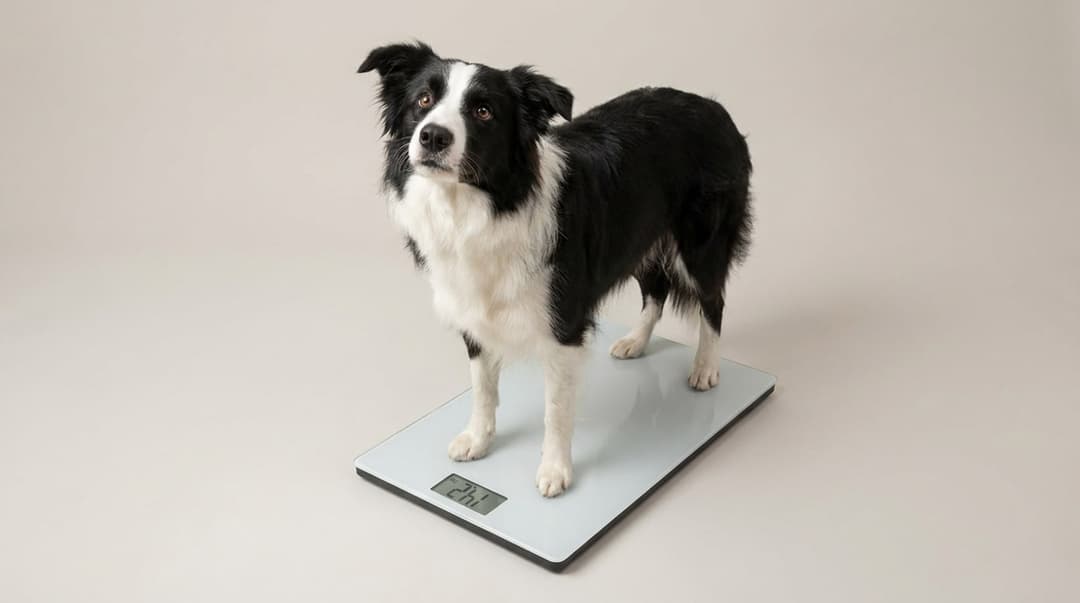
Step 1 — Select pet type: Dog or Cat. Dogs and cats have different healthy weight ranges, body condition scoring standards, and weight loss rate guidelines. A 5kg dog is underweight for most breeds; a 5kg cat is at the high end of healthy.
Step 2 — Select your pet's breed. Breed determines the expected healthy weight range. A 30kg Labrador is within normal range; a 30kg Beagle is severely obese. For mixed breeds, select the primary or closest size-matched breed.
Step 3 — Enter current weight in pounds. Weigh at the same time of day on the same scale. Morning before feeding is most consistent. For small pets, a baby or postal scale gives more precise readings.
Step 4 — Enter age and activity level. Age adjusts ideal weight interpretation — puppies and kittens gain, adults maintain, some seniors lose muscle. Activity level adds context for whether current weight fits lifestyle.
Step 5 — Click Analyse Weight Status. Your result shows BCS assessment, distance from ideal range, and recommended trajectory. Log weekly during weight programmes, monthly for maintenance, to build a trend line.
Understanding Your Results
Body Condition Score — what it is and why it matters more than weight alone. BCS is a 9-point scale: 1–3 underweight, 4–5 ideal, 6–7 overweight, 8–9 obese. A muscled dog can weigh more at ideal BCS; a small-framed dog can be obese at a normal-looking weight.
How to assess BCS at home. Rib test — feel individual ribs with light pressure. Waist check — visible tuck from above. Abdominal tuck — belly rises behind the ribcage from the side.
What the trend line tells you. A single reading is a snapshot; the trend is the story. Slow monthly creep can add 10–15% of ideal body weight over a year without any single weigh-in seeming alarming.
Safe rate of weight loss. Dogs: max 1–2% of body weight per week. Cats: max 0.5–1% per week due to hepatic lipidosis risk. If loss exceeds these limits, increase calories 10% and recheck in two weeks.
When unexplained weight change needs a vet visit. Weight loss without dietary change in pets over 7 warrants investigation. Weight gain despite stable feeding can indicate hypothyroidism or fluid retention. Document the timeline for your vet.
Weight Reference Tables by Breed and Species
Healthy Weight Ranges — Common Dog Breeds
Breed
Male Healthy Weight
Female Healthy Weight
Obese Threshold
Chihuahua
1.8–2.7 kg
1.5–2.3 kg
Over 3.5 kg
Yorkshire Terrier
2.5–3.5 kg
2–3 kg
Over 4 kg
Beagle
10–11 kg
9–10 kg
Over 13 kg
Cocker Spaniel
12–14 kg
10–12 kg
Over 16 kg
Border Collie
14–20 kg
12–18 kg
Over 22 kg
Labrador Retriever
29–36 kg
25–32 kg
Over 38 kg
Golden Retriever
30–34 kg
25–29 kg
Over 36 kg
German Shepherd
30–40 kg
22–32 kg
Over 42 kg
Rottweiler
50–60 kg
35–48 kg
Over 62 kg
Great Dane
54–90 kg
45–59 kg
Over 90 kg
Healthy Weight Ranges — Common Cat Breeds
Breed
Typical Adult Weight
Overweight Threshold
Notes
Domestic Shorthair
3.6–5 kg
Over 5.5 kg
Most common; wide individual variation
Maine Coon
5.9–8.2 kg (M), 3.6–5.4 kg (F)
Over 9 kg (M)
Genuinely large — not fat at 7kg
Ragdoll
5.4–9 kg (M), 4.5–6.8 kg (F)
Over 9.5 kg (M)
Slow to mature; full weight at 4 years
Siamese
3.6–5 kg
Over 5.5 kg
Naturally lean; weight gain easily visible
Persian
3.6–5.9 kg
Over 6.5 kg
Dense coat hides weight gain
British Shorthair
4.5–7.7 kg (M), 3.2–5.4 kg (F)
Over 8 kg (M)
Stocky build; BCS more reliable than weight
Bengal
4.5–6.8 kg
Over 7.5 kg
Highly muscular; may weigh more at ideal BCS
Abyssinian
3.2–4.5 kg
Over 5 kg
Naturally lean and athletic
BCS to Health Risk — What Each Score Means Practically
BCS Score
Description
Visual Signs
Health Risks
Action
1–2
Severely underweight
Ribs, spine, hip bones prominent and visible
Muscle wasting, immune compromise, organ failure
Vet visit same week
3
Underweight
Ribs easily visible, minimal fat cover
Reduced immunity, poor wound healing
Increase calories 15–20%, monitor weekly
4–5
Ideal
Ribs felt easily, visible waist, abdominal tuck
Minimal
Maintain current diet and exercise
6
Overweight
Ribs felt with firm pressure, waist barely visible
Feel ribs with light pressure — they should be easy to feel. From above, a healthy dog has a visible waist. The tracker compares weight to breed ranges and gives a BCS score.